Recreational Diving - Overview |
|||
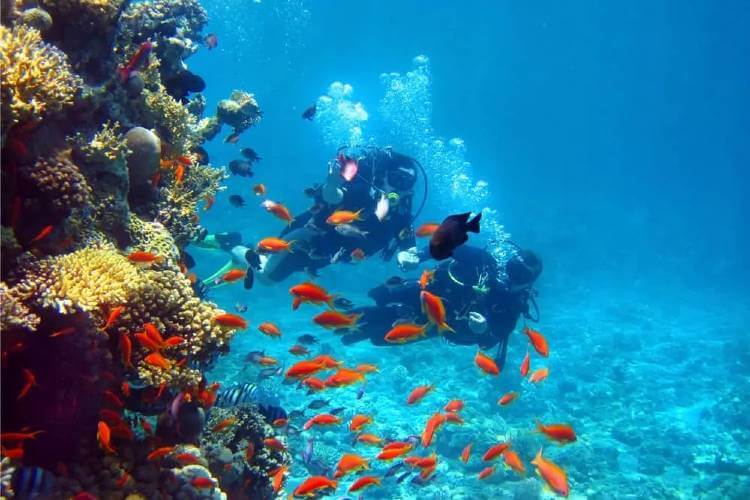
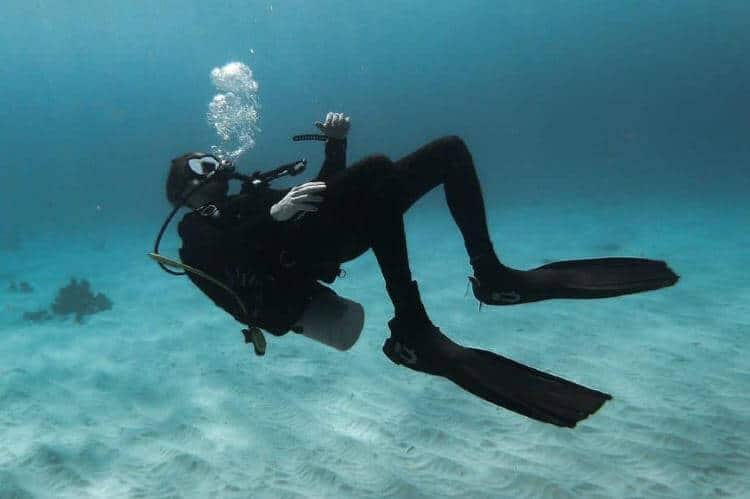
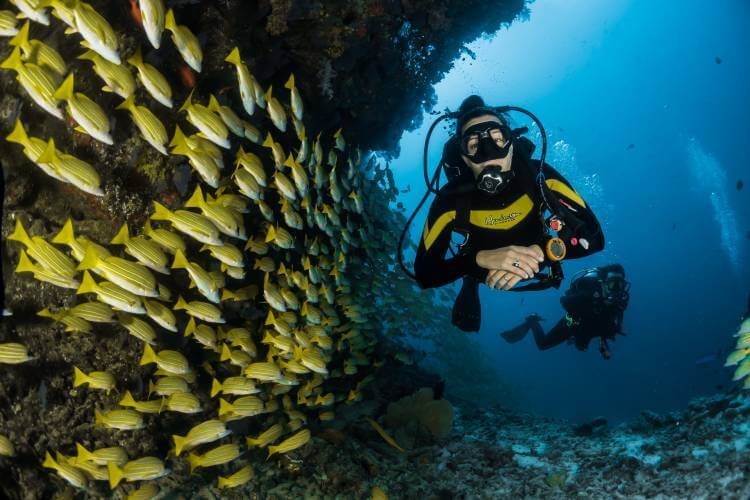
Recreational Diving first began in the late 1940s by a select number of divers in the Mediterranean. Jacques Cousteau was foremost among these diving pioneers and did much to publicise diving as a sport. First France, then England and before long almost every civilised nation began to take notice. Using basic and often homemade equipment early recreational diving was not without a large degree of danger. Slowly the 'fringe enthusiasts' began to gain a following. The 1960s saw Recreational Diving establish itself fully as a sport. Jacques Cousteau was roving the world producing critically acclaimed underwater diving footage and elsewhere diving schools and clubs did much to support this progress. Technology was improving but still very much 'in the dark ages' compared with today. The neoprene wetsuit became available and did much to enhance the diving experience (and entice more of us into the chilly depths!). The following decades saw an explosion in popularity, the rise of PADI with its mass marketing approaches. As tourism and the travel industry became popular diving resorts sprung up to cater to the demand. Technology evolved further as the drysuit became available to the mainstream in the 1980s. Further refinements and technology improvements heralded the return of the Rebreather, (which actually predates open circuit Scuba) first the semi-closed and then at the turn of the century the Inspiration Closed Circuit rebreather (CCR) was launched. As the new millennium dawned it seemed everywhere there was someone struggling to get into aqualung. The 21st Century now sees more divers than ever taking to the waters and some dive sites and dive resorts resemble diving colonies! Open circuit is still the divers choice by the majority but with the rise of the rebreather and other future-driven technology becoming available who can tell where scuba diving will lead?
|